Ruck Weight Calculator
Find your ideal rucking weight based on body weight and experience level. Get personalized recommendations for safe, effective training and progressive overload guidance.
Calculator Input
Ruck Weight Guidelines by Experience Level
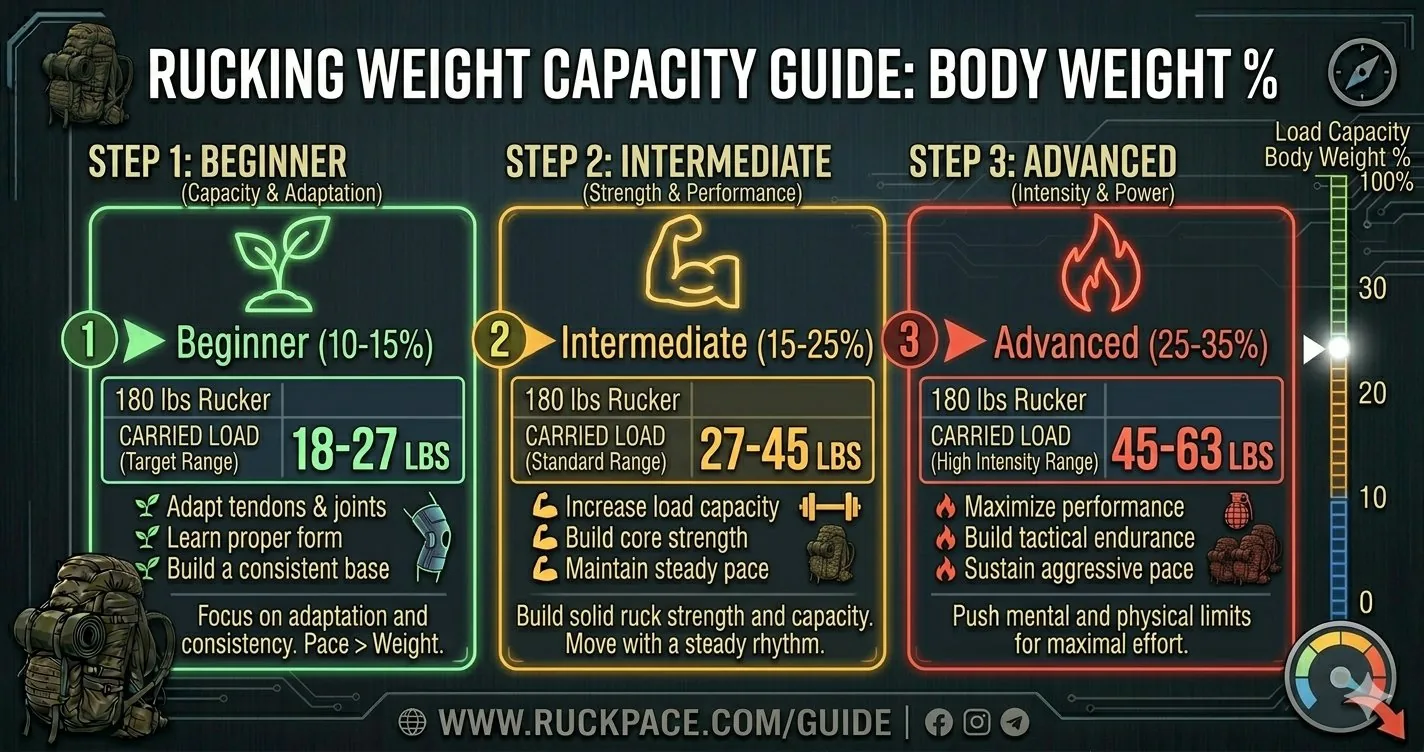
These guidelines are based on percentage of body weight and represent safe, effective ranges for different experience levels. Individual factors may require adjustments.
| Level | % Body Weight | 180 lb Person | Timeline |
|---|---|---|---|
| Beginner | 10-15% | 20-25 lbs | 0-3 months |
| Intermediate | 15-20% | 25-35 lbs | 3-6 months |
| Advanced | 20-25% | 35-45 lbs | 6-12 months |
| Elite | 25-33% | 45-60 lbs | 12+ months |
Understanding Ruck Weight Selection
The Body Weight Percentage Method
The most reliable way to determine appropriate ruck weight is using body weight percentage. This method accounts for individual size differences and scales appropriately. A 150 lb person and 200 lb person should not use the same absolute weight - the percentage method ensures relative load remains consistent and safe.
Why Start Light?
Connective Tissue Adaptation: Tendons, ligaments, and joints adapt slower than muscles. Starting light allows these structures to strengthen gradually, reducing injury risk significantly.
Form Development: Proper rucking form is easier to learn and maintain with lighter loads. Bad habits formed under heavy weight are difficult to correct later and increase injury risk.
Sustainable Progress: Starting too heavy often leads to early burnout, overuse injuries, or frustration. Conservative starts allow long-term progression and consistency - the real key to fitness development.
The 10% Rule
For absolute beginners, starting at 10% of body weight is ideal. This weight is challenging enough to provide training stimulus while light enough to allow focus on form, breathing, and pacing. Most people underestimate how challenging even 10% body weight becomes over 3-5 miles.
Factors That Influence Ideal Weight
Previous Training Background
Athletes with strength training, running, or hiking backgrounds often tolerate higher starting weights. Former military, law enforcement, or firefighters may start at intermediate levels immediately. Complete beginners need more conservative starting points regardless of perceived fitness.
Age Considerations
Athletes under 30 with no injury history can progress faster. Those 40+ should be more conservative with starting weights and progression rates. Connective tissue becomes less resilient with age, requiring more gradual adaptation periods.
Injury History
Previous knee, back, hip, or foot injuries require conservative starting weights. Those with current joint issues should consult healthcare providers before starting rucking. Even fully healed injuries may require starting 5-10 lbs below calculated recommendations.
Training Goals
General Fitness: Use lower end of recommended range for higher frequency training (4-5x weekly). Focus on time under load rather than weight carried.
Event Preparation: Progress toward event-specific weights over 12+ weeks. GORUCK challenges often require 30+ lbs - build to this gradually from lower starting points.
Military Standards: Military requirements typically demand 33-50% body weight capacity. This requires 6-12 months minimum progression from beginner weights for most people.
Distance Considerations
Weight recommendations assume 3-5 mile distances. Shorter distances (1-2 miles) can handle 5-10 lbs more. Longer distances (8+ miles) should use 5-10 lbs less. Adjust based on your typical training distance.
Progressive Overload for Rucking
The 5-Pound Rule
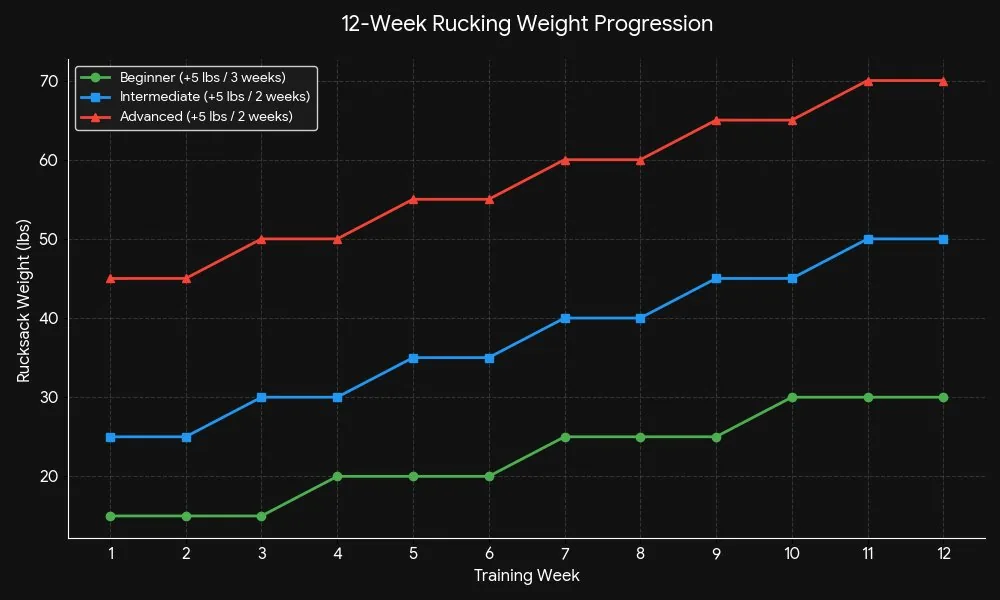
Increase weight in 5-pound increments. Smaller jumps (2.5 lbs) work well for lighter individuals under 150 lbs. Larger jumps (10 lbs) are too aggressive and increase injury risk. Five pounds provides noticeable progression without overwhelming adaptation systems.
The 2-3 Week Timeline
After adding weight, maintain it for 2-3 weeks before the next increase. This allows full adaptation. Signs you're ready to increase: current weight feels noticeably easier, form remains solid throughout sessions, no joint pain or excessive fatigue, recovery feels complete between sessions.
Increase Weight OR Distance, Never Both
This is the most important progression rule. When adding 5 lbs, maintain your current distance. When increasing distance by 1-2 miles, maintain your current weight. Simultaneous increases in both variables cause most overuse injuries.
Sample 12-Week Beginner Progression
Weeks 1-2: 20 lbs, 2-3 miles, 3x per week
Weeks 3-4: 25 lbs, 2-3 miles, 3x per week
Weeks 5-6: 25 lbs, 3-4 miles, 3x per week
Weeks 7-8: 30 lbs, 3-4 miles, 3x per week
Weeks 9-10: 30 lbs, 4-5 miles, 3x per week
Weeks 11-12: 35 lbs, 4-5 miles, 3-4x per week
Plateau Management
Plateaus are normal at certain weight thresholds (30 lbs, 40 lbs, 50 lbs). When progress stalls: maintain current weight for 3-4 weeks, focus on improving pace or distance, add supplemental strength training, ensure adequate protein and sleep, then attempt next weight increase.
Common Weight Selection Mistakes
Starting Too Heavy
The most common mistake. New ruckers often start with 30-40 lbs because it "doesn't feel that heavy" initially. After 2-3 miles, excessive fatigue sets in, form breaks down, and injury risk spikes. What feels manageable standing still differs dramatically from sustained loaded walking.
Ego-Driven Progression
Comparing your weight to others or rushing to reach "impressive" numbers leads to injury. Everyone's body adapts differently based on age, injury history, and training background. Progress at your own rate - consistency over years matters more than quick gains.
Ignoring Pain Signals
Joint pain (knees, hips, lower back) indicates weight is too heavy for your current conditioning. Muscle fatigue is normal and expected. Sharp, persistent, or worsening pain requires immediate weight reduction or rest. Pushing through joint pain causes injuries requiring weeks or months of recovery.
Inconsistent Weight Distribution
Weight should sit high on your back (between shoulder blades), close to your body. Poor weight placement makes even appropriate weights feel excessive and damages form. Invest in proper ruck or ensure weight is secured tightly against your back.
Neglecting Recovery
Heavy rucking requires 48+ hours recovery between sessions. Training too frequently with heavy loads doesn't allow adaptation. Beginners need 2-3 sessions weekly. Advanced ruckers might handle 4-5 sessions, but at least one should be at lighter weight.
Practical Weight Management Tips
Building Your Weight System
Use weight plates, sandbags, or ruck plates designed for training. Avoid irregular objects that shift during movement. Having 5-10 lb increments available (10, 20, 30, 40 lbs) allows precise progression without expensive equipment purchases.
Testing New Weights
When adding weight, test with shorter distance first (1-2 miles). If form holds and fatigue is manageable, proceed to normal distances. If struggling with short distance, weight increase was too aggressive.
Variable Weight Training
Not every session needs maximum weight. Use periodization: one heavy session (upper range), one moderate session (mid-range), one light session (lower range) per week. This allows higher total volume while managing fatigue.
Deload Weeks
Every 4-6 weeks, take a deload week with 20-30% less weight. This aids recovery and prevents overtraining. Some use deload weeks to work on pace with lighter loads. Return to normal weights refreshed and often stronger.
Frequently Asked Questions
Can I use a regular backpack for rucking?
Yes initially, but proper rucking backpacks with hip belts and sternum straps distribute weight better and prevent injury. Regular backpacks work for very light weights (10-15 lbs) and short distances, but dedicated rucking gear becomes necessary as weight increases.
Should women use lower percentages?
The percentage guidelines work for all genders because they're relative to body weight. A 140 lb woman uses the same percentages as a 140 lb man. Absolute weights differ, but relative loads remain appropriate and safe for both.
How do I know if I'm ready to increase weight?
You're ready when: (1) current weight feels noticeably lighter than initial sessions, (2) you maintain good form throughout your typical distance, (3) you're not experiencing joint pain, (4) recovery feels complete between sessions, and (5) you've used current weight for 2-3 weeks minimum.
What's the maximum safe ruck weight?
For trained individuals, 33% body weight (1/3) is the military standard and a practical maximum for most. Elite athletes and military personnel train to 50+ lbs, but this requires years of progressive conditioning. Never exceed 40% body weight without extensive experience and specific event requirements.
Should I use different weights for different distances?
Yes - adjust weight based on distance. Shorter intense sessions (2-3 miles) can use upper range of your weight recommendation. Longer endurance sessions (8+ miles) should use lower range. This prevents overloading on high-volume days.