🎒 Rucking Calculator

Calculate Calories, Optimal Weight & Training Plans

2,847 calculations today ✓ Trusted by 50,000+ ruckers

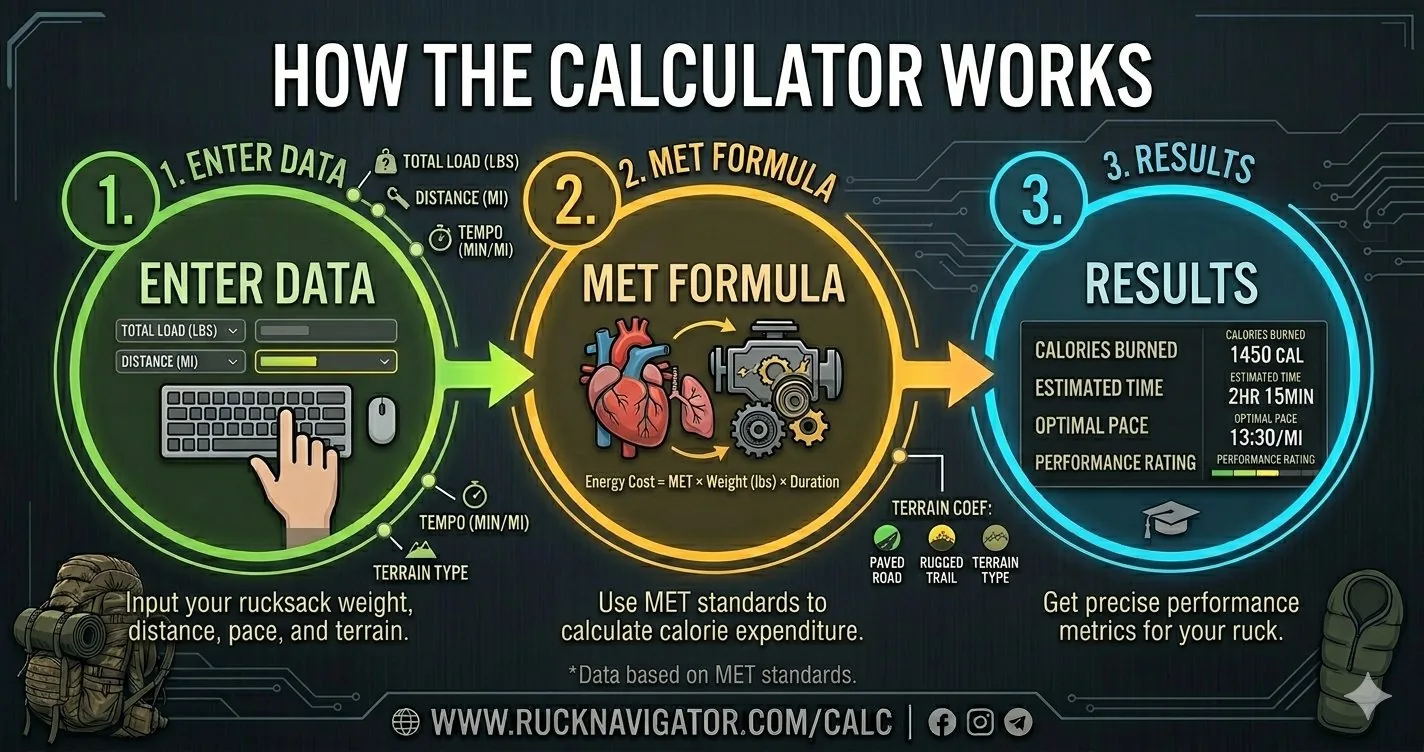
Calculate Your Rucking Stats

Enter weight between 50-500
Recommended: 10-30% of body weight
Typical: 15-18 min/mile with weight

🎯 Find Your Optimal Ruck Weight

Quick Rucking Tools

🎯 Optimal Weight

Find your ideal starting ruck weight

📊 Progress Tracker

Track your rucking journey

🏋️ Training Plan

Get 12-week custom plan

⚖️ Ruck vs Run

Compare calories & impact

Recommended Rucking Gear

Ruck Plate

GORUCK Ruck Plate

$95.00

View on Amazon →
Rucking Backpack

Tactical Backpack

$79.99

View on Amazon →
Rucking Boots

Tactical Boots

$129.00

View on Amazon →

Frequently Asked Questions

How many calories does rucking burn?

Rucking typically burns 400-700 calories per hour, depending on your weight, ruck weight, pace, and terrain. That's 2-3x more than regular walking. Use our calculator above for your specific numbers.

What is the ideal ruck weight for beginners?

Beginners should start with 10-15% of their body weight. For a 180 lb person, that's 18-27 lbs. Gradually increase by 5 lbs every 2-3 weeks as your body adapts.

Is rucking better than running?

Rucking is lower impact than running (better for joints) while building more strength. It burns similar calories but with less injury risk. Great for people with knee issues or those wanting functional fitness.

How often should I ruck per week?

Start with 2-3 times per week, allowing rest days between sessions. Advanced ruckers can do 4-5 sessions weekly. Listen to your body and avoid overtraining.

What are military ruck march standards?

U.S. Army standard: 12 miles in under 3 hours with 35 lb ruck. Marine Corps: 20 miles in under 4 hours with 45 lbs. Start gradually and work up to military standards if that's your goal.

The Complete Guide to Rucking

What is Rucking?

Rucking is walking with a weighted backpack (ruck). Originally a military training method, it's now popular for fitness, fat loss, and building mental toughness. Unlike running, rucking is low-impact, making it accessible for all fitness levels.

Benefits of Rucking

How to Start Rucking Safely

  1. Start Light: Begin with 10 lbs or 10% of body weight
  2. Perfect Your Form: Keep shoulders back, core tight, natural stride
  3. Choose Good Footwear: Supportive boots or trail shoes
  4. Progress Gradually: Add 5 lbs every 2-3 weeks
  5. Listen to Your Body: Rest when needed to prevent injury

Essential Rucking Gear

Backpack: Look for padded straps, hip belt, and internal frame. Military surplus works great for beginners. Quality rucks like GORUCK last years.

Weight: Ruck plates are ideal (flat, won't shift). Alternatives: dumbbells wrapped in towels, sandbags, or heavy books. Distribute weight high and close to back.

Footwear: Ankle support is key. Trail running shoes for shorter rucks, boots for longer distances or rough terrain.

Use our calculator above to track your progress and calories burned for each session!